
Bathroom renovation
A bath or a walk-in shower without a tray, waterproofing tested with water, safe electrics and extraction: a bathroom that won't…
from 5 880 ₾/room
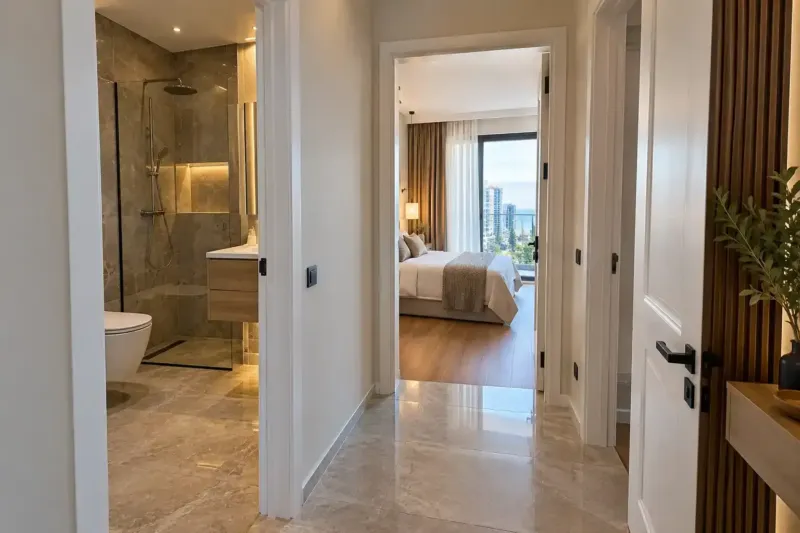
Room renovation in Batumi has to allow for water and steam in the bathroom, kitchen and balcony, and for condensation and mould behind furniture in the bedroom and walk-in wardrobe. You can update one room or the whole apartment. In the second case the order matters: we do the rough work across the whole floor area at once and the finishing from the furthest room towards the front door, so that nothing already finished gets damaged.
from 3 480 ₾/roomThe final price is confirmed once agreed.
A bath or a walk-in shower without a tray, waterproofing tested with water, safe electrics and extraction: a bathroom that won't…
from 5 880 ₾/room
A separate toilet or small combined bathroom: a boxed-in riser with an access hatch, an installation frame, a bidet shower and…
from 3 480 ₾/room
Circuits for appliances, the hood duct, water and drains, splashback and floor: we prepare the kitchen so the units fit the design…
from 5 400 ₾/room
The bed against a quiet wall, heavy curtains in a ceiling recess, sockets on both sides and an air conditioner that doesn't blow…
from 450 ₾/m²
Kitchen and sofa areas, a TV wall with no visible cables, air conditioning sized for a large room and lighting that switches on in…
from 450 ₾/m²
Sockets with safety shutters, wardrobes fixed to the wall, paint without a strong smell and a layout that will grow with the child…
from 475 ₾/m²
Porcelain tiles by the door, a wardrobe that gets air, clear access to the consumer unit, a full-length mirror and lighting: a…
from 620 ₾/m²
A narrow passage with no window, a row of doors and walls knocked by suitcases: how we handle lighting, doors, recesses and corner…
from 690 ₾/m²
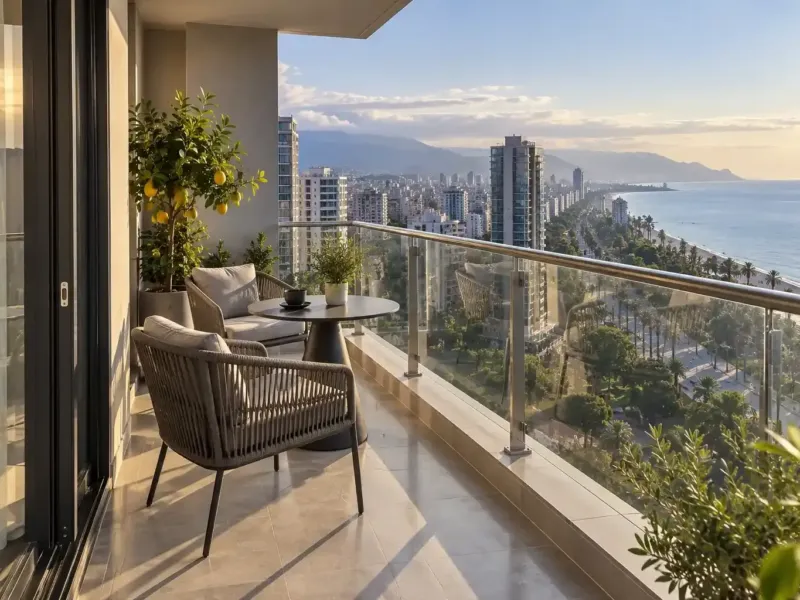
An open or glazed balcony by the sea: a fall towards the edge, waterproofing under the tiles, stainless steel fixings and…
from 510 ₾/m²
A partition, ventilation against damp, lighting on a sensor and built-in backing for shelves and rails: we prepare a room for a…
from 490 ₾/m²
A home office for work and video calls: quiet from the neighbours, lighting with no glare on the monitor, an internet cable to the…
from 510 ₾/m²
A windowless storage room that doesn't smell of damp: air in and extraction, waterproofing under the washing machine, a water…
from 570 ₾/m²
When the whole apartment is being renovated, we do the strip-out, cable and pipe runs, plaster and screed across the whole floor area at once. Wet processes need time to dry: while the screed dries in the rooms, the tiler is already working in the bathroom. Only at the finishing stage does the work move from room to room.
Finishing starts with the wet areas and the ceilings, floors go down towards the end, and interior doors go in after the floors. We complete the rooms starting with the one furthest from the front door. The entrance hall and corridor are finished last, because materials come in and waste goes out through them for the whole renovation.
In a bathroom, two questions decide everything: where the water goes and where the steam goes. We waterproof the whole floor and take the waterproofing up the walls, higher in the shower area, and test it with water before tiling. Steam is taken out by an extractor fan, and in a bathroom without a window we fit a fan with a timer that keeps running for a few minutes after the light is switched off.
We leave access to the meters, valves and the drain inspection point through a hatch in the tiling or a removable panel. A washing machine in the bathroom needs its own circuit with an RCD and its own valve on the supply pipe, so it can be shut off without turning off the water to the whole apartment.
The building's shared risers often run through a separate toilet. We check their condition before tiling, because replacing a riser later, through finished tiles, costs much more.
We plan the kitchen around the appliances. We run water, drainage and separate electrical circuits to wherever the sink, dishwasher, hob and fridge will stand. The extractor hood is ducted into a separate ventilation shaft if there is one. If not, we fit a recirculating hood and improve the general ventilation of the apartment.
In a humid climate a kitchen has its own weak spots: the worktop edges by the sink, the base units next to the dishwasher, the splashback behind the hob. We seal cut-outs and edges, fit a leak sensor with an automatic shut-off valve under the sink, and make the splashback from a material that can handle steam and grease.
If the kitchen is open to the living room, make sure both areas have the sockets and lighting they need. In an apartment you rent out, a dishwasher noticeably cuts the cleaning between guests.
In living spaces, the main threat in a humid climate is mould behind furniture standing against an external wall. We leave a gap between that wall and any wardrobe or bedhead, and give built-in wardrobes ventilation grilles at the bottom and top so that air can flow behind them.
In the bedroom we position the air conditioner so that cold air doesn't blow onto the bed. In a children's room we choose washable paint, sockets with safety shutters and window restrictors. A study needs sockets and a network cable by the desk, lighting that doesn't cause glare on the screen, and soft materials if you are often on video calls.
The living room has the most equipment: a TV, speakers, an air conditioner, sometimes a projector. We lay the cables for them at the rough stage, otherwise you end up with cable trunking running along the walls.
In rainy Batumi the entrance hall is where wet shoes and umbrellas end up, so we lay porcelain tiles by the front door. Next to the shoe cabinet we fit a socket for a shoe dryer, and we keep the consumer unit (fuse box) accessible, with no closed cupboards in front of its door.
The corridor ceiling is a convenient place to hide air conditioning pipes and ducts. The ceiling then needs an access hatch, otherwise the drainage and joints can't be reached later without taking the ceiling apart.
In a humid climate a walk-in wardrobe or storeroom must not be sealed off. Without air coming in and going out, the clothes inside start to smell damp within a season. We fit a ventilation grille in the door or a fan, and if the storeroom holds a washing machine or a water heater, we run a drain there and waterproof the floor.
A balcony by the sea takes wind-driven rain and salt. First we check the slope from the door to the edge and the waterproofing under the tiles: water has to run away from the threshold and outwards. We use outdoor tiles with a textured surface, and outdoor tile adhesive and grout as well.
We inspect metal railings and brackets for corrosion, remove the rust and repaint them. If you want to glaze the balcony, we check this against the building's rules, because glazing changes the facade.
If the air conditioner's outdoor unit stands on the balcony, we leave room around it for servicing. We route its condensate drain so that water doesn't pool on the tiles or drip onto the neighbours' balcony below.
If you are renovating the whole apartment, think in stages rather than rooms. Strip-out and rough work are done everywhere at once, and in the finishing the bathroom and kitchen go first, because tiling and plumbing take the most time.
The entrance hall and corridor are finished last, since materials are carried through them until the end. If you renovate one room at a time, start with the most complicated one, usually the bathroom. That way there is less risk of having to open up a finished room next door for the sake of a pipe or a cable.
A turnkey renovation of a 4–6 m² bathroom costs 5 880–8 400 ₾, while a compact 2–3 m² bathroom comes to 3 480–4 800 ₾. This covers labour and materials for the rough work; tiles and sanitary ware are priced separately. The estimate depends most on the area of tiling, replacing pipes and the riser, moving the shower or toilet, a concealed toilet frame and the grade of sanitary ware.
Send photos and a plan of the bathroom, and within 24 hours on business days we will reply with a preliminary estimate. The final cost is set after the site measurement, once the estimate is agreed. Every item in it is listed separately, so you can compare options, such as a shower with a floor drain or a ready-made shower tray, and decide where to save.
Yes, if the apartment has a second bathroom or you are ready to manage for a few days without water in one area. We seal off dusty work with plastic sheeting, cover the floor along the crew's route and don't let waste pile up in the apartment.
The first days are the hardest: strip-out, cutting channels for cables and replacing pipes. We schedule this work back to back and warn you in advance when the water and power will be off. If there is only one bathroom, we discuss a temporary toilet connection or moving out for those days.
Mould grows in a bathroom wherever moisture stays for a long time: in the joints, behind the bath, on the ceiling above the shower. What works against it is an extractor fan that doesn't switch off straight after the shower, a heated towel rail and the habit of leaving the door ajar.
During the renovation we build in what can't be fixed later without opening things up: waterproofing taken up the walls, a floor that slopes to the drain, and tight joints where the bath and shower tray meet the wall. Silicone seals age and should be replaced like any consumable, without waiting for black spots.
It depends on how you use it. An open balcony needs only waterproofing, a slope and outdoor materials, and it is easier to look after. A glazed one keeps out wind-driven rain and salt, and you can dry laundry and store things on it.
In summer a glazed balcony on the sunny side gets very hot, and in winter it collects condensation, so we leave some of the panels opening. We check any decision to glaze against the building's rules. In an apartment let by the day, an open balcony is easier to clean between guests.
We reply within an hour during business hours. Message us or leave a request: we’ll call you back, go over the details and suggest the next step.
Mon–Fri 10:00–19:00, Sat 11:00–16:00