
Black frame vs white frame
What each frame includes, what gets redone later and which one lets you start renting out sooner.
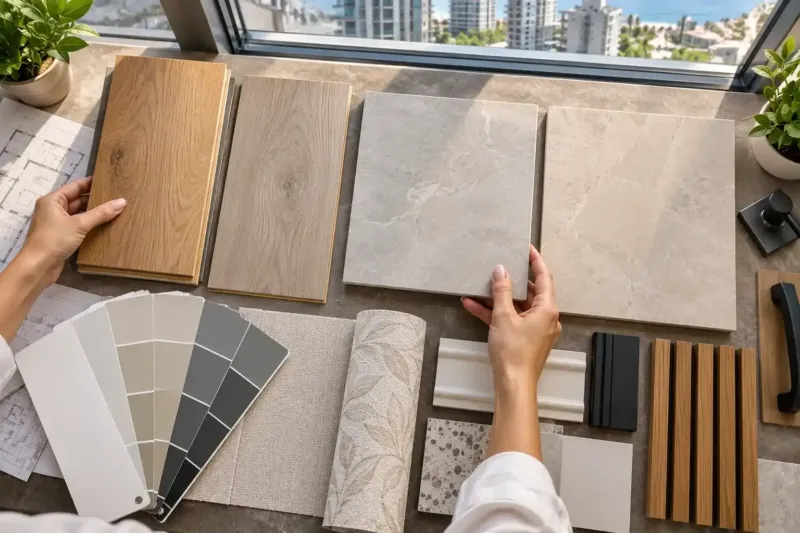
Almost every renovation decision by the sea comes down to two questions: how an option copes with humidity, and who will live in the apartment, you or tenants. This page collects the choices that owners in Batumi usually hesitate over: frame or finished apartment, the scope of the renovation, floors, walls and ceilings, who does the work and whether you need a designer. For each one we say briefly what to look at, and the detailed comparisons are on separate pages.
from 210 ₾/m²The final price is confirmed once agreed.
What each frame includes, what gets redone later and which one lets you start renting out sooner.
A developer's finish or your own renovation from white frame: timing, payment plans, concealed work and wear from renting out.
How the pipes, wiring and screed tell you whether a cosmetic job is enough or the apartment needs a full renovation.
What to lay on the floor by the sea: damp, an empty apartment in winter, the kitchen and hallway, short-term rental.
Why engineered wood is safer by the sea, when solid wood is worth it and what indoor climate a wood floor needs.
Leaks from upstairs, air conditioning lines and ventilation, lighting and timing: which ceiling to choose by the sea.
Floors, walls, showers and open balconies: where you need porcelain, where ceramic will do and how laying differs.
External walls, furniture against a cold wall and touch-ups between guests: where paint works in a humid climate and where…
Wet areas, a moving base, chip repairs and the applicator's experience: where microcement fits and where tiles do.
When an independent crew is enough, when you need a company, and what to check with any contractor before the first payment.
When skipping a design project makes the renovation cost more, and when a furniture and electrical plan is enough.
Buy with a finished renovation or do your own: timing, money, concealed work, checks before the purchase and tax.
Humidity exposes weak spots quickly, so the first question is whether an option will survive a damp winter, a leak from the neighbours and an empty apartment with the windows shut. The second thing to ask yourself is who will live there. With both questions in mind, most apartment renovation choices in Batumi become clearer.
For yourself, you can choose the parquet and wallpaper you like. An apartment for short-term rental needs things that are washable, quick to fix and able to take knocks from suitcases. There is also a third question that people think of too late: how you will keep track of the renovation if you live outside Georgia.
| Choice | What decides it in Batumi |
|---|---|
| Frame or developer finish, an apartment with or without renovation | How much time you have before moving in or renting out, and how much control you want over pipes, wiring and materials |
| Cosmetic or full renovation | The condition of the pipes, wiring and screed |
| Floors | How the floor covering copes with water, sand and wet shoes |
| Walls and ceilings | How the finish behaves in damp conditions and when water leaks from above |
| Crew, company, designer | Who is responsible for the result and how you check it from a distance |
The first choice comes before you even buy: an apartment in black frame or in white frame. Black frame gives you freedom with the layout and full control over pipes and wiring, but renovating from it takes longer. White frame is quicker, but it has to be accepted carefully: each developer defines what its white frame includes, and the screed and plaster vary in quality.
Next comes the choice between white frame and a developer's finished apartment. A finished apartment saves time if you plan to rent it out from the very first month. But you don't choose the materials or the pipe and cable layout, and you only see the end result. So for short-term rental, with a damp winter when the apartment stands empty, it makes more sense to buy in white frame and renovate the apartment for your own purposes.
In a resale apartment, the pipes, wiring and screed settle the question of cosmetic or full renovation. There is a similar choice when you buy: an apartment with someone else's renovation, or one without, where you do your own. Buying with the renovation already done saves months, but it has to be inspected before the transaction, especially the bathroom, the ventilation and any water marks on the window reveals.
Laminate or SPC vinyl is a common debate in apartments by the sea. SPC vinyl copes with water and suits kitchens and hallways. Laminate is cheaper in the basic grades and many people find it nicer to the touch, but it swells at the joints if water regularly gets on it.
Solid parquet and engineered wood flooring both have real wood on top. The difference is in the base. The multi-layer base of engineered flooring moves less when humidity changes, and in Batumi that is an argument in its favour. Solid wood parquet is more demanding: it needs a stable indoor climate and dehumidifying when the apartment is empty.
Choosing between ceramic and porcelain tiles is simpler. Porcelain is denser and absorbs almost no water, and grit on shoes doesn't harm it, so it goes on floors, balconies and in hallways. Ceramic wall tiles are easier to cut, and for bathroom walls they are usually enough.
With paint and wallpaper, humidity decides everything. Washable paint copes with damp and cleaning, while wallpaper on an external wall in an apartment left empty in winter can peel and get stained. Wallpaper makes sense where people live all year round and the ventilation works.
With microcement in a bathroom, the question is how easy it is to repair. It gives a surface without joints, but it needs an experienced tradesman, a rigid base and a protective sealer, and a damaged patch is hard to repair invisibly. With tiles, you can replace a single cracked tile.
A stretch ceiling goes up quickly and with almost no dust, and if water leaks from above, the PVC film holds it. Plasterboard is chosen for niches, concealed curtain tracks and built-in lighting; it needs moisture-resistant boards and time for filling and painting. The two can be combined in one room.
An independent crew can be cheaper on labour, but you have to set up the estimate, contract, warranty and reporting with them yourself. A company has higher overheads and is responsible under the contract for the whole scope. If you live nearby and are ready to buy materials and check concealed work yourself, a good crew is a reasonable choice. Compare the contracts: the stages, the payment terms, the warranty and who will honour it a year later.
You need a designer when you are changing the layout, want a consistent style or are renovating an apartment to live in for years. Without a designer, a standard apartment still needs the minimum: a furniture plan and an electrical plan, and for short-term rental also a selection of finishes and lighting.
When you compare prices, include the labour and think about what the option will need after a few seasons. A cheap finish that has to be replaced after the first leak or the first season of short-term rental ends up costing more than an option that is more expensive at the start.
Guide prices per square metre are in the price table on this page. A cosmetic renovation with basic materials costs from 210 ₾ per m², a full renovation with materials for the rough work from 570 ₾, and a turnkey renovation with mid-range finishing materials from 900 ₾. Labour from a private crew, from white frame to the finishing, costs 275–360 ₾ per m², but that price does not include materials. The final cost is set after the site measurement, once the estimate is agreed.
From photos and a plan we prepare a preliminary estimate within 24 hours on business days, and each choice appears in it as a separate item. If you can't decide between two options, we will price both.
For a kitchen, a hallway or an apartment let by the day, SPC vinyl is usually the more sensible choice: it copes with water, and glue-down vinyl tiles can be replaced one at a time. Laminate suits bedrooms and an apartment you live in yourself, where you keep an eye on the humidity.
If you go for laminate, choose one with moisture-sealed click joints and don't lay it by the front door or next to the dishwasher. In an apartment left empty and unaired in winter, wood-based floors cope with damp worse than vinyl or porcelain tiles.
A renovated apartment is quicker to move into or start renting out, but you pay for someone else's choice of materials and can't see what is hidden in the walls. White frame takes longer to make liveable, but the electrics, pipework and waterproofing are done by your contractor, and we check the developer's work. You choose the finishes yourself.
If you buy a renovated apartment, check it at handover: the sockets, the floor slopes in the bathroom, whether the extractor fans work, water marks on the window reveals. We also do this inspection for buyers who can't come to Batumi, and show it to them by video.
It depends on how much of the control you are ready to take on. With a crew, you buy the materials and check the concealed work yourself. What happens when a pipe starts leaking a year later is also up to you, unless it is written into the contract. With a company, the contract covers these questions: stages, payment after sign-off, the warranty and reports.
If you live outside Georgia, ask any contractor how they report on progress, who signs the acceptance certificates and how to make a warranty claim. Without answers to these questions, a price per square metre tells you very little.
For a standard studio or a 1+1 apartment (one bedroom plus a kitchen-living room) to rent out, a full interior design project is not always needed. Without a designer you will still need a furniture layout and an electrical plan, and an apartment for short-term rental also needs a coordinated selection of finishes and lighting. The space plan can be ordered separately from the full project.
A designer is worth it if the apartment is large, you are changing the layout or you want the interior to stand out on booking platforms. For good listing photos, lighting and a tidy frame matter more than expensive materials.
Physically, work can start as soon as you have the keys. Legally, the apartment becomes yours when it is registered in the Public Registry (NAPR), and until then the only protection for money spent on finishing is your contract with the seller or developer.
So before registration it makes sense to do what doesn't depend on it: the handover inspection, measurements, the estimate and the design project. Sometimes the keys in a new building are handed out before ownership can be registered. In that case, check in your contract with the developer whether renovation is allowed before registration and who is responsible for the finishing if the transaction does not go through.
We reply within an hour during business hours. Message us or leave a request: we’ll call you back, go over the details and suggest the next step.
Mon–Fri 10:00–19:00, Sat 11:00–16:00