
Water supply for a private house in Batumi: entry, plumbing, hot water
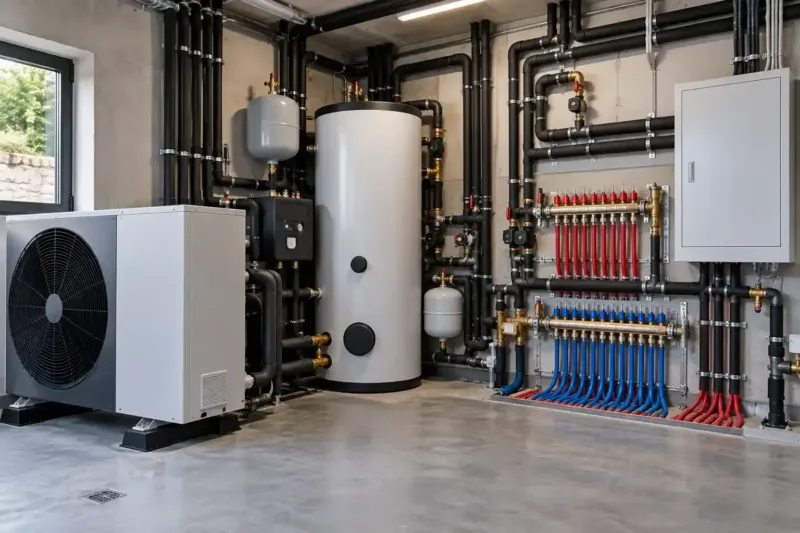
We install water supply for a private house in Batumi from the mains or a well: an HDPE outdoor main in a trench, an entry through a sleeve in the foundation, an assembly with filter and pressure reducer, a storage tank with a booster pump, manifold plumbing with no joints in walls and hot water from a cylinder. A turnkey water point from 210 ₾.
from 210 ₾/pointmanifold distribution of cold and hot water to the fixture, with materials. The final price is confirmed once agreed.
- Timeline: water supply for a 150–200 m² house usually takes 2–4 weeks including the outdoor main
- Warranty: Water supply installation carries a 2-year warranty
Who it’s for
You are building a house and need water from the street or a well
The house has low pressure and supply interruptions
Hot water takes a minute or more to reach the far bathroom
Old pipes in the house leak and scale up
You want the house to shut off the water by itself if there is a leak
What’s included
- checking the connection option at the address
- outdoor main and entry through a sleeve
- entry assembly: valve, filter, reducer, non-return valve
- storage tank with a booster pump
- manifold distribution through the house
- cylinder and hot water recirculation
- water treatment based on a water test
- pressure test, route photos and a drawing
Water supply for a private house in Batumi: where the water comes from
Water supply for a private house in Batumi starts with the question of where the water will come from. In the city and nearby settlements a house is usually connected to the Batumis Tskali network. Whether there is a water main in your street and on what terms a house is connected, we find out by address before the design. Out of town, in the mountains and on new plots the water is often your own: a well or a spring with a storage tank. How we drill and what goes into the pump room is described on the water well page.
Even with mains water we recommend a small storage tank with a booster pump. Interruptions and low pressure do happen, especially on higher ground, and a 1–2 m³ tank gives the house a day's reserve and steady pressure.
Service entry and outdoor main
From the connection point to the house we lay HDPE pipe in a trench, below the zone that washes out after downpours. In the mountains the pipe is buried below frost depth or insulated. The pipe passes through the foundation in a sleeve laid before concreting, otherwise the strip or slab has to be drilled later. At the entry into the house we fit a stop valve, a sediment filter, a pressure reducer and a non-return valve, plus a place for the meter if needed.
Manifold plumbing
Inside the house we distribute water from a manifold: each fixture gets its own pipe with no joints in the screed or wall. If a repair is ever needed, a valve on the manifold shuts off only one point, not the whole house. Pipes are PEX or polypropylene, laid in conduit in the screed so they can be replaced. Before covering, the system is pressure tested and the routes are photographed with reference to the walls.
- separate cold and hot water lines to each fixture;
- valves on the manifold with labelled points;
- outlets for the washing machine, irrigation and an outdoor tap;
- space for filters and water treatment in the plant room;
- a floor drain or tray under the manifold in case of a leak.
Hot water
We provide hot water in one of three ways. With a gas boiler or heat pump we fit an indirect cylinder, and no separate water heater is needed. Without them, an electric water heater or a heat pump water heater, which uses several times less electricity. If bathrooms are far from the cylinder, we add a recirculation loop so that hot water comes at once rather than after a minute. More about electric water heaters on the water heater installation page.
Water treatment and leak protection
Which treatment to fit we decide from a water test. Mains water usually needs only a sediment filter at the entry and a drinking water filter in the kitchen. A well often needs a softener and an iron removal filter. Filter options are described on the water filters and treatment page. In a house the owner visits occasionally we fit leak protection: sensors under fixtures and a motorised valve on the main supply that shuts off the water by itself.
How much house water supply costs
A turnkey water point with materials costs from 210 ₾: manifold distribution of cold and hot water to the fixture. An outdoor water main in a trench from 75 ₾ per linear metre, an entry assembly from 190 ₾, manifold installation from 270 ₾. A storage tank with a booster pump from 3 120 ₾, whole-house water treatment from 3 960 ₾, an 80 L electric water heater installed from 920 ₾, turnkey leak protection from 1 200 ₾. The mains connection fee is not included in our prices. The final cost is set after a site visit, the design and an agreed estimate. Draining water out of the house is covered on the sewerage page.
Stages and timelines
-
Survey and design
3–7 days
Water source, demand, pressure, distribution scheme.
-
Outdoor main
2–5 days
Trench, HDPE pipe, entry through a sleeve, backfill.
-
Distribution
1–2 weeks
Manifold, pipes to fixtures, pressure test, photos.
-
Equipment
3–5 days
Tank, pump, cylinder, filters, leak protection.
-
Start-up
1–2 days
Flushing, pressure check, settings, drawing for the owner.
Local specifics in Batumi
In Batumi the mains supply can be interrupted, and on streets higher up the slope pressure drops in the evening. So even in city houses we often put a 1–2 m³ tank in the basement or plant room with a booster pump and pressure vessel. The house draws water from the tank, and the mains only tops it up.
In the humid climate cold pipes sweat and wet walls and ceilings. We insulate cold water pipes in the house and leave no bare sections in screed or boxing. In the mountains pipes on the plot and in unheated rooms are protected from freezing, and in a house left empty for the winter we fit a valve to drain the system.
Materials and brands
HDPE outdoor pipes for drinking water. Internal pipes in PEX or polypropylene, in conduit within the screed. Brass manifolds with valves, sediment filters, pressure reducers, non-return valves. Food-grade storage tanks, booster pumps with pressure vessels. Pipe insulation, indirect or electric cylinders, recirculation pumps. Valves and fittings are brass, not cheap zinc alloy, which corrodes quickly.
What makes up the cost
Timeline: water supply for a 150–200 m² house usually takes 2–4 weeks including the outdoor main
- water source and the reserve needed
What raises the cost
- a long outdoor main and rocky ground
- many bathrooms and fixtures
- hot water recirculation
- water treatment for a well
What lowers the cost
- a mains connection right at the plot
- a compact layout with bathrooms close together
We prepare the exact estimate from measurements and photos. It’s free and comes with no obligation.
Get an estimateGuarantees
Water supply installation carries a 2-year warranty. Concealed pipes in walls and floors carry a 5-year warranty. The manufacturer's warranty covers pumps, cylinders and filters, and the plumbing drawing and route photos go into the building file.
Questions and answers
How much does it cost to bring water into a private house in Batumi?
A turnkey water point with materials costs from 210 ₾, an outdoor water main in a trench from 75 ₾ per linear metre. A storage tank with a booster pump from 3 120 ₾. The mains connection fee is not included in our prices; the water company calculates it. The final cost is set after a site visit and an agreed estimate.
Do I need a storage tank if there is mains water?
We recommend one. Interruptions and low pressure happen, especially on higher ground and in the evening. A 1–2 m³ tank with a booster pump gives a day's reserve and steady pressure at every tap. For a rental house that means calm guests and fewer calls.
Why is manifold plumbing better than tee plumbing?
In a manifold system each fixture has its own pipe with no joints in the wall or screed. Joints that might leak are gathered at the manifold, where they are visible. You can shut off one point rather than the whole house, and pressure does not drop when several taps are open.
How can hot water come straight away?
If the bathrooms are far from the cylinder, we add a recirculation loop with a small pump and a timer. Hot water constantly circulates round the loop and reaches the tap in a few seconds. Hot water pipes are insulated so as not to heat walls or lose heat.
Does the house need a water filter?
A sediment filter at the entry is always needed: it protects taps and appliances from sand and rust. Everything else is decided from a water test. Mains water usually needs only a drinking water filter in the kitchen, while a well often needs a softener and iron removal.
Further reading
Send the house plan and address: we will price the water supply within 24 hours
We reply within an hour during business hours. Message us or leave a request: we’ll call you back, go over the details and suggest the next step.
Mon–Fri 10:00–19:00, Sat 11:00–16:00