
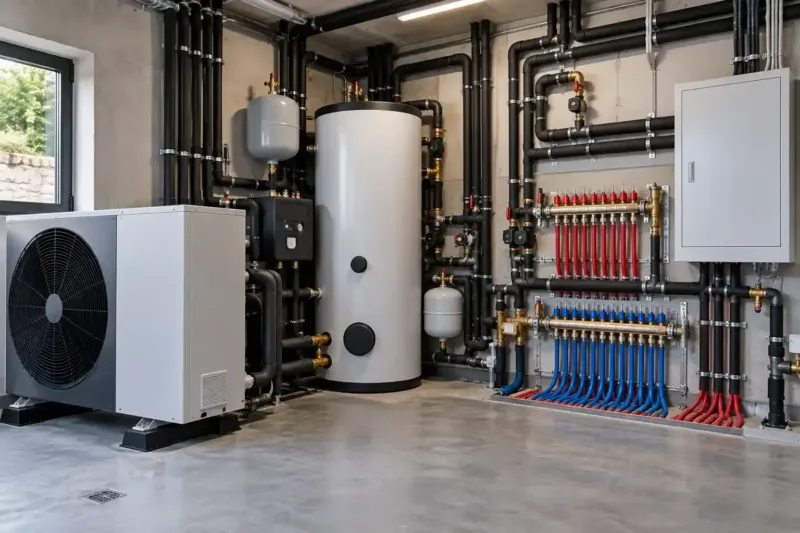
Generator for a house in Batumi: backup power during outages
We size a generator for a house in Batumi by the essential loads: boiler and heating pumps, well pump, fridge, lighting, internet and cameras. We move them to a separate panel, connect the generator through a changeover switch or an automatic start unit, and add batteries for silent operation during short outages. A 3–5 kW inverter generator connected from 3 360 ₾.
from 3 360 ₾/pc3–5 kW petrol inverter generator connected through a changeover switch. The final price is confirmed once agreed.
- Timeline: backup power for a house usually takes 2–4 weeks including equipment delivery
- Warranty: Backup power installation and connection carry a 2-year warranty
Who it’s for
A house in the suburbs or mountains where power goes after storms
You live abroad and worry about frozen pipes in winter
You have your own well, and without power the house has no water
You work from home and cannot be left offline
A rental house where guests must not sit in the dark
What’s included
- list of essential loads and output calculation
- choice of generator, batteries or both
- a separate panel for backed-up circuits
- changeover switch or automatic transfer switch
- base, canopy or enclosure, exhaust routing
- installation, connection, earthing
- test run and switchover check
- maintenance schedule and test runs
Generator for a house in Batumi: when it is needed
In central Batumi power cuts are rare, but in the suburbs, on the outskirts and in mountain villages a house can be left without electricity for several hours after a storm or strong wind, sometimes longer. A generator for a house in Batumi is needed if during that time the boiler and heating pumps, well pump, fridge, internet and cameras must keep running. This matters especially for a house whose owner lives abroad: a winter outage without backup can end in frozen pipes or a flooded basement.
Backup options
| Option | How it works | When it fits |
|---|---|---|
| Petrol inverter generator | Started by hand, the house is switched over with a changeover switch | Rare outages, owners on site |
| Diesel generator with automatic start | Starts and switches the house over by itself during an outage | Frequent outages, owners visit only occasionally |
| Batteries with an inverter | Silently keep essential appliances running for several hours | Short outages, boiler, pump, internet |
| Batteries with a solar system | Charged by the sun during the day | A house with solar panels |
We often combine them: batteries take short outages quietly, and the generator starts if an outage drags on. Solar systems are described on the solar panels page.
Sizing
A generator for the whole house including air conditioners and a heat pump turns out large and expensive. Usually we move the essential loads to a separate panel: boiler and heating pumps, well pump, fridge, lighting, router, cameras, gates. We size the output for them, allowing for the starting currents of pumps, which draw several times more at the moment of starting. For a three-phase house we decide which phases and circuits go on backup.
Connecting it properly
A generator must never be connected to the house through a socket. It is connected through a changeover switch or an automatic transfer switch that disconnects the house from the grid. Otherwise generator current flows into the line, where network company electricians may be working, and when the supply returns the generator burns out. An automatic start unit starts the generator by itself during an outage and returns the house to the grid when power is restored. How the supply and house panel are arranged is described on the power supply page.
Where to put the generator
- outside, under a canopy or in an acoustic enclosure, not in the house or garage;
- exhaust directed away from windows, doors and the ventilation intake;
- on a level base with access for refuelling and servicing;
- away from bedrooms and neighbours because of noise;
- by the sea, protected from salt and driving rain.
Maintenance
A generator that stands idle for years will not start when it is needed. Once a month it is run under load for a few minutes, and automatic start controls do this themselves. Oil, filters and the starter battery are changed on the manufacturer's schedule, and fuel ages over time, so it is replaced. For a house in the mountains this is part of winter preparation, more on the building in mountain Adjara page.
How much backup power costs
A 3–5 kW petrol inverter generator connected through a changeover switch costs from 3 360 ₾. An 8–12 kW diesel generator in an acoustic enclosure with automatic start, installation and connection from 15 600 ₾, a separate automatic transfer switch from 1 680 ₾. Battery backup of 3–5 kW for the boiler, pump, internet and lighting from 6 600 ₾, a 10 kWh battery with hybrid inverter from 14 400 ₾, a three-phase house stabiliser from 5 100 ₾. The final cost is set after the list of essential loads and an agreed estimate.
Stages and timelines
-
Loads
1–3 days
What must keep running, starting currents, outage length.
-
Design
3–7 days
Output, backed-up circuits panel, generator location.
-
Delivery
1–3 weeks
Generator, automatic start unit, batteries.
-
Installation
2–5 days
Base, cables, panel, connection, earthing.
-
Testing
1 day
Simulated outage, set-up, instructions.
Local specifics in Batumi
In the mountain villages of Adjara overhead lines are long, and after a storm, snowfall or strong wind power can be lost for a long time. In winter, without heating and the well pump, the house cools quickly and pipes in unheated spaces can freeze. For such houses we almost always fit a diesel generator with automatic start and backed-up circuits for the boiler and pumps.
In Batumi and on the coast outages are usually shorter, and batteries with an inverter are often enough: they quietly keep the boiler, router, cameras and fridge going for several hours. By the sea the generator goes in an enclosure protected from salt, and the contacts in the automatic start panel are checked at every service.
Materials and brands
Petrol inverter generators for small loads, diesel generators in acoustic enclosures with automatic start controllers. Manual changeover switches and automatic transfer switches. Hybrid inverters and lithium iron phosphate batteries, uninterruptible power supplies for the boiler and internet. Separate panels for backed-up circuits, cables, bases and canopies, silencers and exhaust pipes.
What makes up the cost
Timeline: backup power for a house usually takes 2–4 weeks including equipment delivery
- length of outages
What raises the cost
- a diesel generator with automatic start
- high backup output and a three-phase supply
- high-capacity batteries
- a generator far from the panel
What lowers the cost
- a small inverter generator and a manual switch
- only boiler, pump and internet on backup
We prepare the exact estimate from measurements and photos. It’s free and comes with no obligation.
Get an estimateGuarantees
Backup power installation and connection carry a 2-year warranty. The manufacturer's warranty covers generators, inverters and batteries. The backed-up circuits diagram and start-up instructions go into the building file.
Questions and answers
How much does a generator for a house in Batumi cost?
A 3–5 kW petrol inverter generator connected through a changeover switch costs from 3 360 ₾. An 8–12 kW diesel generator with automatic start and installation from 15 600 ₾. Batteries with an inverter for the boiler, pump and internet from 6 600 ₾. The final cost is set after the list of loads and an agreed estimate.
What generator output does a house need?
We size it not for the whole house but for the essential loads: boiler and pumps, well pump, fridge, lighting, internet, cameras. We allow for the starting currents of pumps. Usually 3–5 kW is enough for basic backup, and 8–12 kW if the kitchen and water heater are also on backup.
Can a generator be connected through a socket?
No. Generator current can flow into the line where network company electricians are working, and when the supply returns the generator burns out. We connect it only through a changeover switch or an automatic transfer switch that disconnects the house from the grid. This matters equally for a small petrol generator for a couple of hours and for a large diesel one.
Which is better, a generator or batteries?
Batteries work silently and instantly, but keep the house going for a few hours and cannot carry large loads. A generator runs as long as there is fuel, but it is noisy and needs maintenance. We often fit both: batteries for short outages, a generator for long ones.
Will the generator start if nobody is home?
Yes, with an automatic start unit. It starts the generator by itself when the grid fails, switches the house to backup and returns it to the grid when power is restored. Once a month it does a test run, and you can get alerts about the generator running on your phone.
Further reading
Send a list of appliances and the address: we will choose backup power within 24 hours
We reply within an hour during business hours. Message us or leave a request: we’ll call you back, go over the details and suggest the next step.
Mon–Fri 10:00–19:00, Sat 11:00–16:00